Loader and Unloader Jobs in India
The worker's own guide to loader and unloader jobs in india: where the work sits, who calls for the hands, what the work asks, the papers, the day rate and the month rate, the shifts, and the route from search to seat.
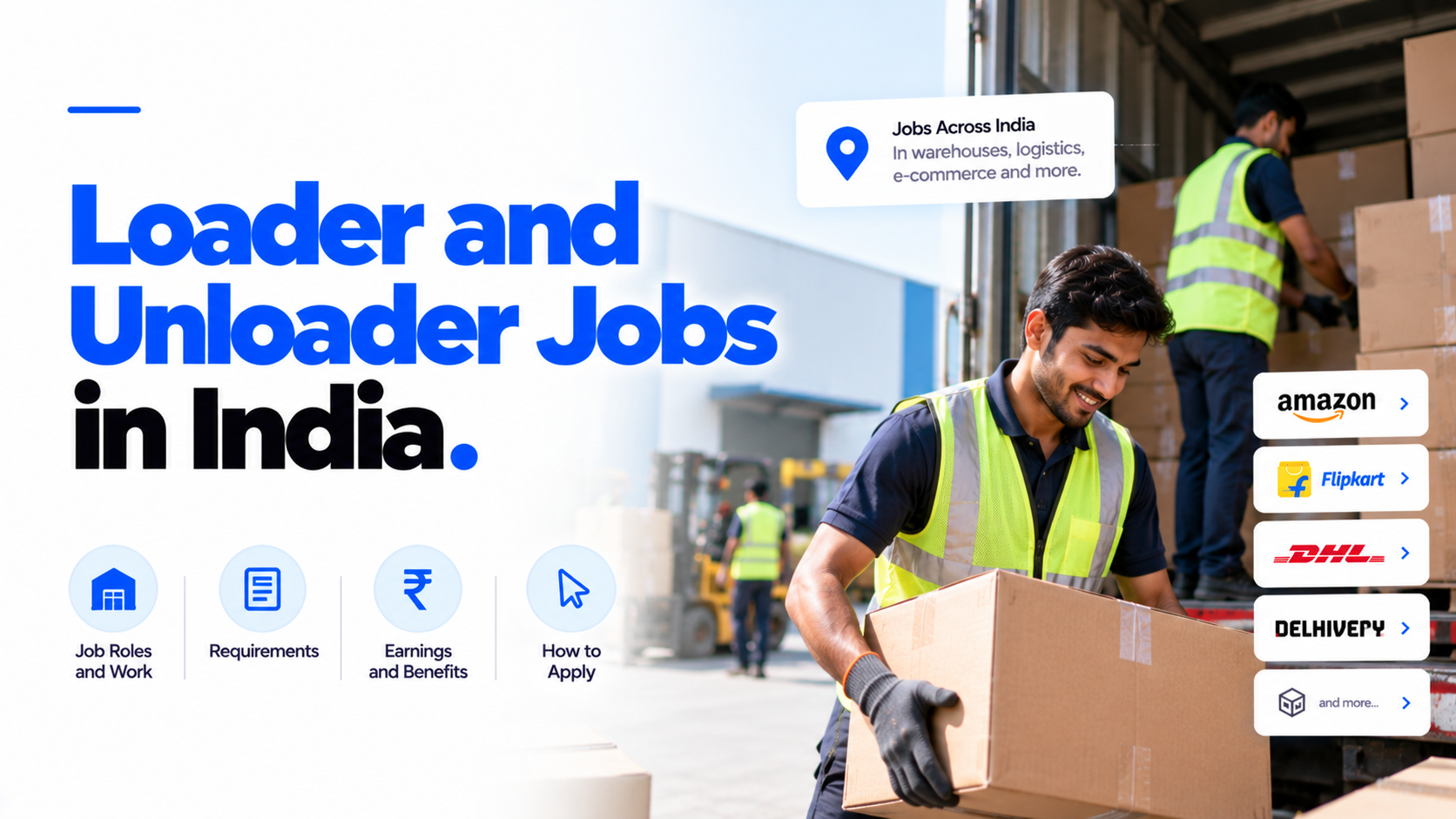
In Srinagar, the fruit mandi at Parimpora wakes before the city does. Trucks that crawl the Jammu highway through the night reach the loading platforms before first light, and the men who unload them read the day before it begins: a full line of trucks promises a long one, an empty platform a short one. The first sacks cross the tailboard while the streetlamps are still lit.
The work is easy to walk past in every Indian town: it is why a shop counter is full before opening time, why a clinic never runs out of medicine, why a factory line does not stop for want of material. Nobody films it; everything depends on it. And every day the trade repeats its two motions - one load in, one load out.
Read those two motions in order and the trade opens whole; this file walks the whole route: loader and unloader jobs in - where the work sits, who calls for the hands, what the work asks, the papers, the day rate and the month rate, the shift, the hiring gate, and the ladder inside the trade.
Where goods change hands
Ask what is a loader and unloader and the answer stands at the back of any truck: the loader puts goods into a vehicle so nothing shifts on the road; the unloader takes goods out so nothing is left behind. The loader unloader job description reads nearly the same on every hiring portal - load and unload cartons, sacks, crates and drummed goods; stack them where the checklist says; count them against the paper; flag the damaged pieces before the vehicle leaves.
The loader unloader duties and responsibilities arrive in four verbs: lift, stack, count, secure. Lift the piece correctly, with the weight close to the body. Stack it heavy-below-light-above so the pile survives the journey. Count it against the manifest so the paper and the platform agree. Secure the load with rope, strap or a closing tailboard. Everything else in the day - the scan, the bill, the delivery - depends on those four verbs being done right; the load is the unit the whole day is counted in.
The designation sits underneath every other job in the movement of goods: the driver's wheel, the picker's shelf, the rider's handlebar all connect through the hands at the platform.The trade list on the hiring site keeps loader families beside the delivery and driving ones; every loader listing carries one quiet advantage - the candidate needs no vehicle and no licence to begin.
Who calls for the hands
The hands are wanted in five places. Transport companies keep crews at the bays and yards of every transport nagar for full-truck work; a loader unloader jobs in transport company listing is the oldest shape of the trade. Warehouses and e-commerce hubs run platforms through day and night shifts, and loader unloader jobs in warehouse seats sit beside the picker and packer lines. FMCG distributors and wholesale traders load shop supplies on weekly cycles, packers-and-movers crews load households onto hired trucks, and the agri mandis move whatever the season brings.
The ground under the trade keeps expanding. The national infrastructure plan that completed five years this month integrates more than 1,800 data layers into one planning map, and its planning group has evaluated more than 400 projects worth 20.23 lakh crore rupees,as the infrastructure plan's five-year note records - every corridor and hub the plan produces ends in a platform where goods change vehicles. The freight running on that ground is rising too: the national carrier loaded 135.35 million tonnes in September 2026, a 6.14 percent rise over the previous September, with food grain loading up 25 percent,as the carrier's monthly loading note records.
The mandi door alone is wide: 1,656 mandis across 23 states and 4 union territories sit on the e-NAM trading platform, 1.80 crore farmers and 2.72 lakh traders are registered on it, and trade worth 4.82 lakh crore rupees has moved through it since inception,as the agriculture ministry's mandi note records - and each of those trades was sacks on a platform before it was a number.The Bengaluru warehouse desk on the hiring network shows what one big city keeps open; every other city runs the same work at its own hubs, yards and markets.
What the work asks
Loader job without experience is the normal way in, because the entry gate is the body, not the certificate. Most loader seats ask for eighth or tenth pass at most, eighteen years or older, and a fitness the foreman can see at a glance. The men he works beside watch how he lifts for a week, and the platform itself does the training.
What the work asks is specific: a back and a pair of shoulders that carry repeated weight through the shift, knees that do the lifting instead of the waist, and feet that stay sure on a wet tailboard. Most seats need no vehicle and no licence - this is the trade for the man who owns no bike - though a few warehouse platforms add a hand pallet or stacker once the count is trusted.
The interview matches the trade. Questions about marks are few; questions about habit are many: can you start at five in the morning, can you carry a loaded sack up a plank, will you be at the gate the day after a festival. Three honest yeses are usually the whole selection.
The papers for the hands
The documents required for loader job joining are the lightest set in the job market: Aadhaar, a bank account for the wage credit, a couple of photographs, and - where the employer is formal - a school certificate that fixes the age record. PAN joins the papers where the seat is salaried; a fitness note goes in where the company insists on one.
Verification runs on rails the country already owns: an Aadhaar check at joining, one fingerprint, one code, and the name has reached the payroll. What the trade does not carry counts for just as much - no bike papers, no licence renewals, no fuel receipts, no vehicle insurance. Among all the ways to earn in this market, this is the cheapest one to stay paper-clean in.
Joining still stalls on small grounds: a name that disagrees between the Aadhaar and the bank record, a photograph too dark to match a face. Match the spellings once, keep clear re-scans on the phone, and the papers stop being a reason to lose a day.
The day rate and the month rate
Loader unloader salary in arrives in two shapes, and the shape decides the month. The day rate is a sum per day or per truck, settled the same evening in cash or credit - the mandi, the transport nagar and the shifting crews still work this way. The month rate is a salaried seat at a warehouse or hub, credited on a fixed date with attendance and shifts written into it.
The two shapes carry different weathers. The day rate climbs with the season - a harvest week or a festive dispatch week pays in repeated trips - and falls to nothing when the trucks stop coming, which is why day-rate men keep two or three yards that hire at different hours. The month rate survives the slow week untouched and gives up the festive spikes to buy the guarantee.
Before joining, get three things plain: how the day is counted - hours present or trucks cleared - what a half-day or a rained-off platform pays, and when the wage actually lands in the hand. Plain answers hold through the season; vague answers collect their lesson later.
The shift and the load
The trade runs on the vehicle's timetable, not on the clock. Mandi platforms empty by early afternoon because the trucks must return to the highway; warehouse platforms hand over in shifts timed to the trailer queues; and where a hub runs through the night, the overnight hours pay a little more, because fewer men want those hours.
There is a craft inside the lifting. A stack leans or survives on how the first layer was laid - heavy below, light above, corners interlocked - and a careful loader saves the truck a breakdown on the road. The count runs beside the lift the whole time: pieces off, pieces on, damaged pieces set apart before the tailboard closes. Everything the scanner records later stands on what the hands did at the platform.
The work comes in short bursts of heavy effort, not in one long strain, so the pause between trucks is part of the job's shape, not a laziness in it - the loading line that paces itself unloads the fourth truck as fast as the first. Water drunk through the shift does more than water drunk after it; in the winter months a dry pair of gloves keeps the rope in the hand.
Where the joining happens
How to apply for loader unloader job openings starts at the gate, not at a form. Transport companies take hands at their bay offices in the transport nagar; hub HR desks post warehouse seats ahead of each expansion and interview across a table by the gate; contractors fill mandi crews through the men already loading there; and hiring apps list seats by area - which is where most searches for loader unloader work in ends.
The rounds stay short because the work proves itself quickly: name, age, papers, a look at the hands, and a start the same week. The best reference travels through the platform itself - the man who counted right for one truck is asked back for ten - and fluency in the local language matters less than arriving before the first truck does.
The searching takes longer than the lifting: a new hand can lose days to the finding and minutes to the rounds.The walkthrough on the hiring blog follows how one worker went from searching to a confirmed seat, and loader families walk it the same as any other.
The back that carries the trade
The back is the first tool of this trade, and the trade bills it first. Knees bent, back straight, weight taken close to the body - the lift done right costs nothing today, and the lift done wrong collects for decades. Every foreman's oldest instruction is still the truest: lift with the legs, not with the waist.
The kit is small and earns its keep every shift: shoes with grip for wet tailboards, gloves for the rope burns, a cloth for the sun hours. A muscle treated in the first week stays a week; untreated, it becomes a season. The men who last in this trade are the ones who treat the small discomforts early.
Sleep is the other half of the kit, and seats that end after sunrise turn it into a plan: a dark room, a phone on silent, hours defended in daylight. A body healed nightly carries for years; a body spent weekly retires early from this trade.
The ladder inside the trade
Loader unloader career growth runs on trust with numbers. The bottom rung is the platform. The second is the count: loaders who never lose a piece become checkers, the men with the clipboard who tally the truck against the manifest. The third is the foreman's seat - running the platform instead of carrying on it. The fourth sits inside the machine hall: a certified forklift or stacker operator earns more per shift than a hand and lifts with a joystick instead of a spine.
The machine rung has a public on-ramp. Under the skill mission, 24.3 lakh candidates have been reported placed across short-term training, a placement rate of 42.8 percent,as the skill mission's note records, and the newer PMKVY 4.0 courses are built around industry-relevant skills with on-the-job training included - warehouse and logistics seats among them. One certificate turns a decade of platform habit into a documented skill.
Two papers outlast every seat in this trade: an e-Shram registration - the national register of unorganised workers, portable across jobs - and whatever health cover the family keeps. Enrol once; both stay valid wherever the work goes next.Today's openings on the hiring site show which hubs are taking hands,the state list on the hiring site cuts the search to the candidate's own state, andthe Srinagar delivery page on the hiring network shows one valley city's live seats - and every morning asks the question the mandi taught first: what stands at the platform today, and who is ready when it arrives.
The mandi platform in Srinagar and the warehouse platform in any Indian city are the same trade at different hours: goods arrive with the night, hands move them to where the next vehicle waits, and the count comes out equal on both sides of the tailboard. The motion is the least filmed in the economy and among the most depended on - every shelf, counter and clinic stands on somebody's lifted stack.
For a candidate deciding whether this trade fits,the hiring-network explainer on the blog shows how the network links workers with the seats employers are filling, one state at a time. And the trade ends where it began: a body taught to lift, papers that match, and the steadiness to be at the platform before the first truck arrives.