India's Gig Economy Could Create 6 Million Jobs by 2030. But Who Will Connect Workers to These Jobs?
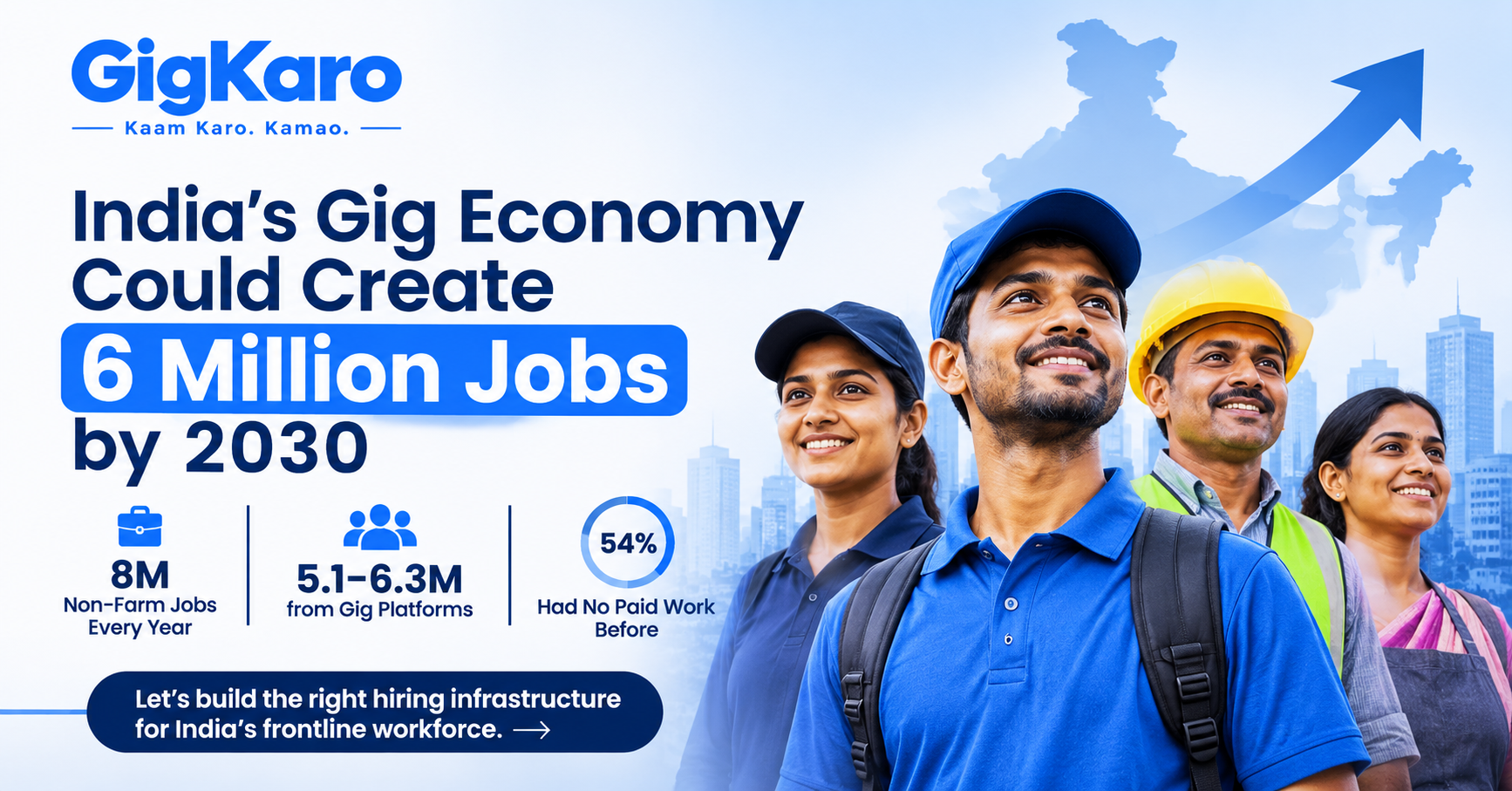
India's gig economy could create 5.1–6.3 million employment opportunities by 2030, according to Redseer's latest analysis. But creating jobs is only part of the challenge. The real opportunity lies in connecting businesses with reliable workers, improving hiring execution, and building a workforce ecosystem where skill
India's employment landscape is changing.
Millions of people are entering the workforce every year. At the same time, businesses across delivery, logistics, quick commerce, retail, manufacturing and other frontline sectors need people to keep their operations running.
Yet one major challenge remains: connecting the right workers with the right employment opportunities at scale.
A recent analysis by Redseer Strategy Consultants, published on November 13, 2026, highlights the scale of this opportunity.
According to the report:
- India needs approximately 8 million non-farm jobs every year by 2030.
- Gig platforms could contribute 5.1–6.3 million of these opportunities.
- Approximately 54% of current gig workers had no paid work before entering gig work.
These numbers point towards something bigger than the growth of gig platforms. They highlight the growing importance of accessible employment infrastructure in India.
The real opportunity is beyond job creation
Creating employment opportunities is only one part of the challenge.
Businesses need reliable workers. Workers need access to genuine opportunities. And both need a system that makes hiring and employment more transparent and efficient.
Consider a delivery worker in Patna.
After working with one company for a year, the worker moves to another employer. Their previous experience, work history and skills should not disappear simply because they have changed companies.
The next employer should be able to understand their experience and make a better hiring decision.
This is where the future of workforce infrastructure becomes important.
India's frontline workforce needs better hiring infrastructure
Frontline employment is spread across thousands of cities, towns and local communities.
Many employers struggle with:
- Finding relevant workers in different locations.
- Reaching candidates beyond major urban centres.
- Verifying previous employment and experience.
- Reducing candidate drop-offs during recruitment.
- Improving successful joining rates.
- Understanding worker employability and employment continuity.
Traditional recruitment systems were not necessarily designed for this level of distributed hiring.
India needs stronger infrastructure that connects employers with workers through local reach, technology and reliable hiring execution.
Why worker employment history matters
A worker's experience should become an asset, not disappear when they change employers.
Imagine a system where an employer can understand:
- Which industries a worker has worked in.
- Their previous employment experience.
- How long they worked with each employer.
- Their skills and experience.
- Their employment journey over time.
Such information can help employers make more informed hiring decisions while giving workers better opportunities to demonstrate their experience.
The future of frontline employment should not be limited to finding the next job. It should also recognise the experience workers build throughout their careers.
How GigKaro is approaching this opportunity
At GigKaro, we believe frontline hiring needs to move beyond job listings and application collection.
Our approach focuses on connecting employers with relevant workers and driving successful joinings.
GigKaro brings together technology, employer demand and distributed sourcing capabilities to support frontline hiring across India.
Our focus includes:
1. Distributed workforce sourcing
Reaching workers across cities, towns and local communities rather than depending only on traditional recruitment channels.
2. Hiring execution
Helping employers move from job requirements to relevant candidates, interviews, selections and successful joinings.
3. Worker employability
Recognising the skills and employment experience workers build as they move between companies and industries.
4. Employment continuity
Building towards a system where workers' employment journeys and experience can be better understood by future employers.
The next phase of India's employment story
India's workforce opportunity is much larger than the number of jobs created by any single platform.
It is about making employment opportunities accessible, making hiring more efficient and ensuring that workers' experience is recognised.
The next generation of workforce infrastructure will need to connect three important things:
- Employers who need reliable talent.
- Workers who need accessible employment opportunities.
- Technology that makes hiring and employment information more transparent.
The gig economy may become one of India's largest employment engines by 2030.
But the real opportunity lies in building the infrastructure that makes this employment ecosystem work.
At GigKaro, we are building towards that future.
Source: Redseer Strategy Consultants, "Internet Gig-work: India's Fastest Growing Job Category", November 13, 2026. Read the original analysis.